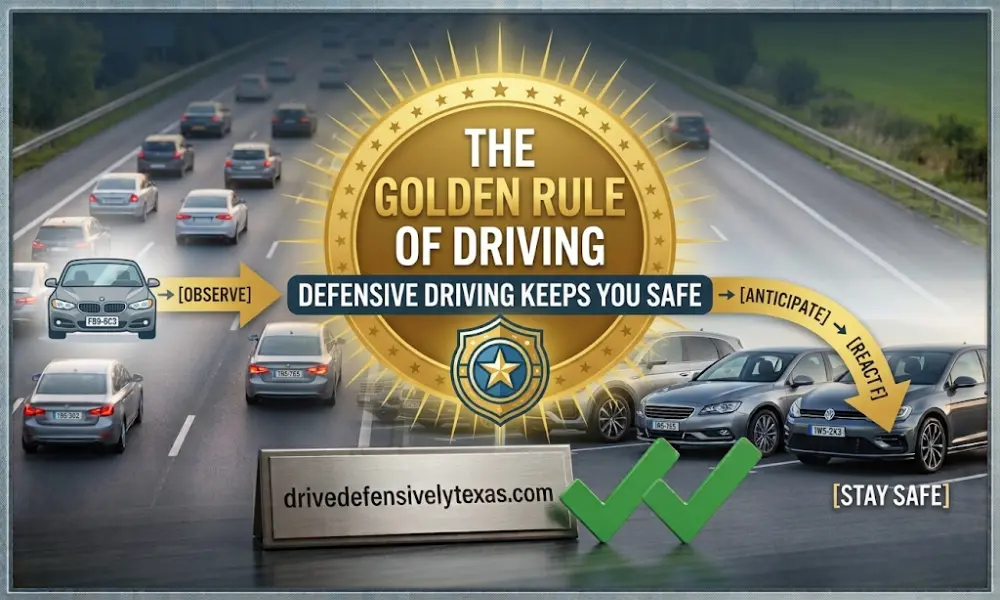
Someone gets cut off, brake-checked, or tailgated for no real reason almost every day. A five-minute delay turns into a ten-minute grudge match nobody actually asked for.
The golden rule of driving clears up most of that mess with one habit: treat other drivers the way decent treatment is expected back. Stay patient. Yield when it costs nothing. Let small slights go before they snowball into something dumber.
Nice idea, sure, but does it hold up once real traffic gets involved, or is it just something for a bumper sticker?
A 2025 AAA Foundation for Traffic Safety report found that 96% of drivers admitted to at least one aggressive act behind the wheel in the past year. Basically everyone.
Which is exactly why the one calm driver in the lane next to someone stands out so much. Here’s what that one habit changes once it actually gets practiced.
What the Golden Rule of Driving Actually Means
Nothing fancy here. Yield when another car needs to merge, even with zero obligation to. Give cyclists room instead of squeezing past at the last second. That driver who blew through a yellow light might be rushing toward something worse than being late.
None of that excuses recklessness, but patience wins more often than payback does. This isn’t about being a pushover on busy roads, either. It’s about remembering every driver out there is carrying the same risk as everyone else.
One rude moment rarely stays put. It spreads, and pretty soon someone’s tailgating three cars back for a reason that’s already been forgotten.
Why This Driving Principle Still Matters Today
Roads look different now than they did decades ago, but the logic hasn’t aged. Traffic moves faster, phones grab more attention, tempers flare quicker. In that mess, the golden rule of driving works almost like a pressure valve.
One driver staying calm can stop a tense moment from turning into something worse. Notice how a single wave changes the mood of an entire intersection. Letting someone merge, slowing down for a pedestrian, easing off a yellow instead of flooring it.
Small stuff, but it adds up. Intersections feel less hostile, merges go smoother, and the whole flow of traffic gets a little easier to live with.
Everyday Habits That Quietly Break This Rule
Most violations aren’t dramatic. They’re small habits nobody really notices doing. Tailgating someone already going the speed limit happens constantly, for no good reason. High beams stay on for oncoming traffic more often than they should.
Driving slow in the passing lane backs up everyone behind. Speeding up just to block a lane change is petty, plain and simple. Honking the instant a light turns green fixes nothing and proves nothing.
None of these feel like a big deal alone. Stacked together, they’re exactly what turns an ordinary commute into something stressful and unpredictable. Fixing it doesn’t take a personality overhaul. It takes a two-second pause before reacting.
How Defensive Driving Reinforces the Golden Rule
These two ideas aren’t separate, they’re really the same coin. Defensive driving means expecting mistakes from everyone else on the road. The golden rule means not becoming the mistake someone else has to dodge.
Put together, they’re basically an unspoken deal between every driver nearby.Assume the other car might mess up, and just don’t be the reason it does. Structured training is really what turns courtesy from a personality quirk into an actual skill.
Plenty of Texas drivers building that skill the right way start with an Online Texas Defensive Driving Course, which walks through real scenarios where patience stops a collision before it ever gets the chance to start.
Putting the Rule to Work in Daily Traffic
Theory’s easy. Real traffic is where patience actually gets tested. This rule shows up in small choices: not chasing the car that just cut someone off, giving a confused driver extra time at a four-way stop, not flashing headlights out of pure spite.
Every one of those moments is a fork in the road between escalating and just letting it go. Calm wins more often than not. City driving raises the stakes here, too.
Heavy traffic, constant lane changes, aggressive merging, all of it makes courtesy matter even more. Drivers who take a Driving Course in Dallas often say their commute feels noticeably calmer once these habits stop being a conscious effort.
Simple Habits Worth Building Right Now
Real change comes from small habits repeated often, not vague good intentions. Leave extra space in heavy traffic instead of closing every gap that opens up.
Treat yellow lights as a signal to ease off, not speed through. Answer other people’s mistakes with patience, not a horn or a glare. Check blind spots properly before merging, no matter how sure that lane change feels.
None of this is complicated or even time-consuming, really. It’s consistency that eventually turns it into instinct.
Anyone looking to cut tickets, lower insurance costs, or just feel less wound up while driving might want to look into a course through drivedefensivelytexas.com, built around real situations instead of dry lectures.